"A triumphant tale of identity and forgiveness. Widow of Gettysburg shows us the full sweep of that famous battle, from the men on the battlefield to the civilian women whose lives and homes were overrun by history. Through unforgettable characters, impeccable research, and an intricately woven plot, Jocelyn Green drew me in and didn’t let me go."
~Sarah Sundin, award-winning author of With Every Letter
The Book
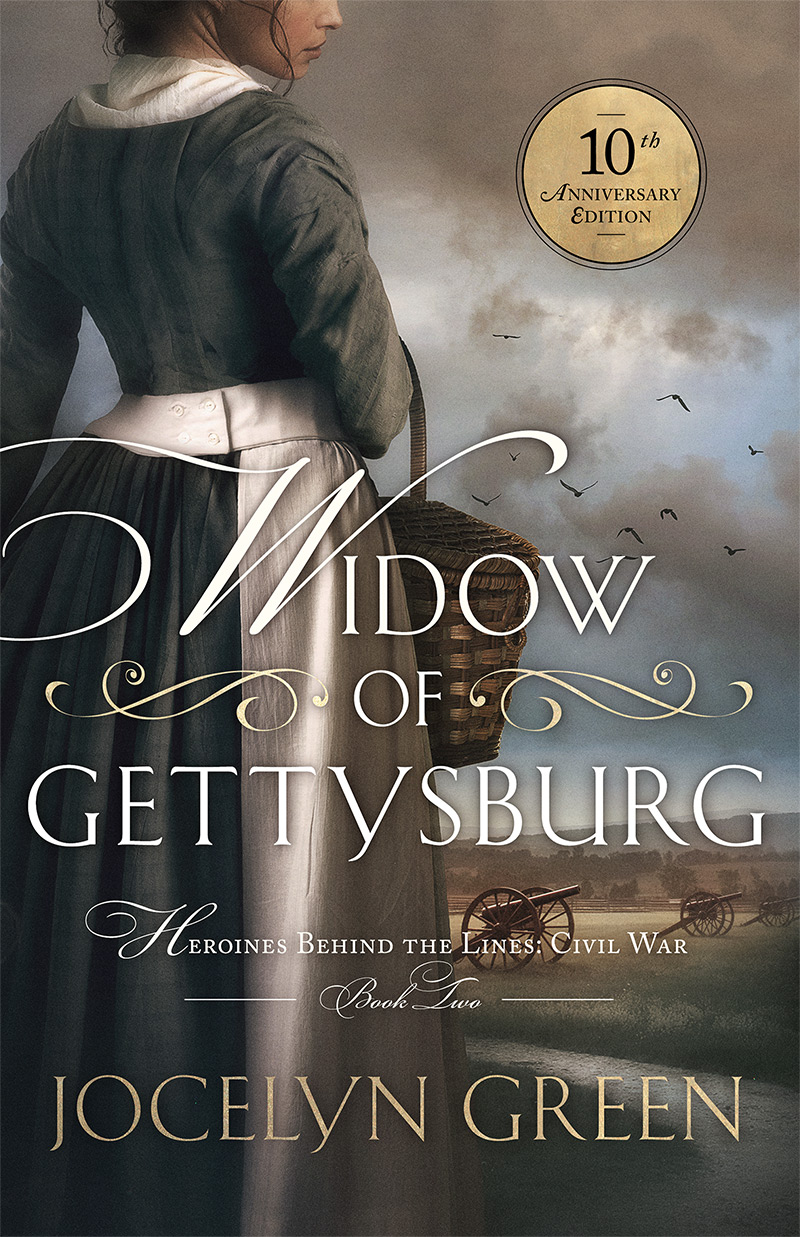
The farm of Union widow Liberty Hollow is confiscated and converted into a Confederate field hospital, bringing her face-to-face with unspeakable suffering and a Confederate scout who awakens her long dormant heart. While Liberty’s future crumbles, the past comes rushing back to Bella, Liberty’s hired help who was formerly enslaved. Bella finds herself surrounded by Southern soldiers—and one reporter who learns a secret she’s hidden from Liberty for 20 years.
In the wake of shattered homes and bodies, Liberty and Bella struggle to pick up the pieces the battle has left behind. Will Liberty be defined by the tragedy in her life, or will she find a way to triumph over it?
Widow of Gettysburg is a work of fiction inspired by first-person accounts from women whose letters and journals offer a glimpse into the lives of women living in Gettysburg during the battle and its aftermath.
This 10th anniversary edition includes new scenes and chapters with more history and romance than the original version.
The Book Trailer
The Inspiration
Twenty-four hundred residents inhabited the borough of Gettysburg in 1863 when 163,000 men and 15,000 animals converged upon it for the three-day battle in July. Some fled to protect themselves and their property, while many—most of them women and children—were caught in the crossfire. Surviving the battle was only the beginning. While most history books follow the armies on their journeys away from Gettysburg when the battle receded, Widow of Gettysburg keeps the focus on the aftermath being played out in the town. When the armies withdrew, 21,000 wounded were left in their wake, with only 106 Union medical officers and far fewer Confederate doctors. Women and children were drafted into hospital service, whether they felt confident in their ability or not. Days after the battle’s end, thousands more invaded the already overtaxed town in the form of relief workers, sightseers, and those looking for their loved ones. The quiet life they had known was gone. Women of Gettysburg did not ask for the distinction, but many became heroines behind the lines just the same. Widow of Gettysburg is the story of their resilience. In the words of Gettysburg housewife Sarah Broadhead, “We do not know until tried what we are capable of.”
A Reading from Widow of Gettysburg
Purchase from these Retailers: